Addiction is often whispered about in corridors of shame, labeled as a “moral failing” or a “lack of willpower.” But if you have ever tried to white-knuckle your way through a craving—whether it’s sugar, social media, nicotine, or alcohol—you know that the harder you fight, the stronger the monster grows.
At Nature Nurturers, we view the body as an integrated ecosystem. Addiction isn’t a “broken” brain; it’s a survival mechanism that has been hijacked.
In this guide, we will break down the biochemistry of why “just saying no” doesn’t work, and provide you with a 60-second somatic technique to regain the driver’s seat of your own life.
Part 1: Why Willpower Fails (The Survival Hijack)
If you try to resist an addiction with pure discipline, it becomes ten times stronger. This isn’t because you are weak; it’s because of how your brain perceives survival.
The Survival Tagging System
Your brain has one primary job: keep you alive. When you are thirsty, your brain releases chemicals to drive you toward water. When you are hungry, it drives you toward food.With addictive substances or behaviors, the brain’s “tagging” system gets confused:
- Drugs: They reduce stress immediately. The brain tags this as a “survival win.”
- Gambling: It signals the acquisition of resources (money) with minimal effort.
- Ultra-Processed Foods: High-calorie hits signal “energy security” to a primitive brain that still thinks a famine is coming.
The Dopamine DeceptionMost people think Dopamine is the “pleasure chemical.” It’s actually the “gas pedal.” Dopamine is the “fine-tuner” that focuses your attention on what is important for survival. The actual pleasure comes from Opioids (endorphins). Over time, the pleasure fades, but the Dopamine-driven “drive” remains. You no longer do the thing because it feels good; you do it to find relief from the mounting pressure.
The Dopamine Deception
Most people think Dopamine is the “pleasure chemical.” It’s actually the “gas pedal.” Dopamine is the “fine-tuner” that focuses your attention on what is important for survival. The actual pleasure comes from Opioids (endorphins). Over time, the pleasure fades, but the Dopamine-driven “drive” remains. You no longer do the thing because it feels good; you do it to find relief from the mounting pressure.
Part 2: The Biochemistry of the "Urge"
To stop an impulse, you must understand what that “pressure” in your chest actually is. It’s a chemical storm involving two main players: Glutamate and Cortisol.
The Glutamate Spike
Glutamate is the brain’s primary excitatory neurotransmitter. In addiction, you experience massive “Glutamate Spikes.” When Glutamate goes too high, it becomes an excitotoxin—it agitates the nervous system.This is why a craving feels like:
- Agitation: A restless “need” to move or act.
- Pressure: Physical tightness in the chest or throat.
- The Shift: Moving from “I want this” to “I have to have this.”
The Fight-or-Flight Dial
When you “fight” a craving, your body views that resistance as a threat. It turns up the dial on your Flight-or-Fight system, flooding you with Cortisol. This increases anxiety, making the addiction seem like the only “exit door” to safety.
Part 3: The 60-Second Technique to Break the Cycle
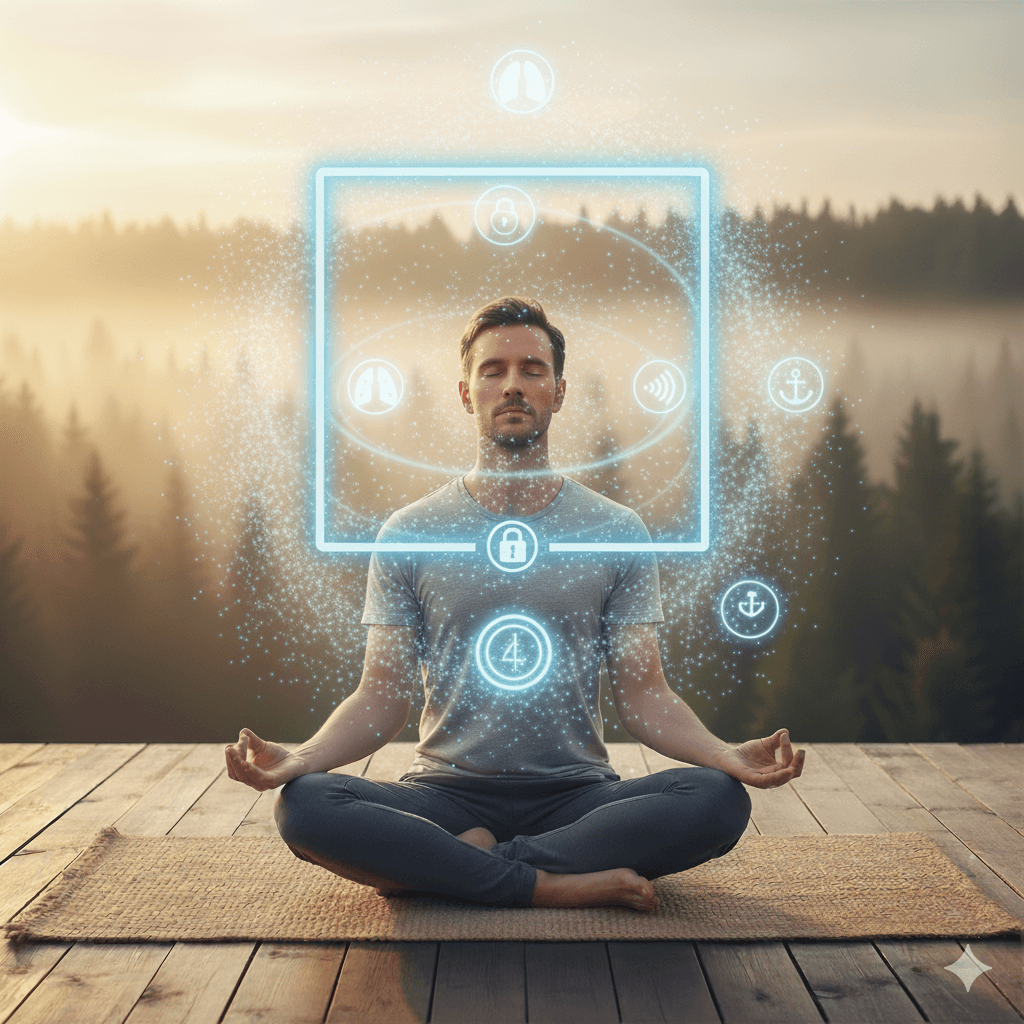
This technique works by shifting the brain from the Emotional/Survival Brain (Amygdala) to the Analytical Brain (Prefrontal Cortex). By “observing” the sensation, you stop being the sensation.
Step-by-Step Somatic Reset
If you feel a craving hitting right now, follow these four steps:
1. Rate the Intensity
On a scale of 0 to 10, how strong is this impulse? Don’t judge it; just give it a number. Is it a screaming 9 or a nagging 4?
2. Locate the Sensation
Where is the addiction living in your body right now?
- Is it a knot in your stomach?
- A tightness in your chest?
- A buzzing in your forehead? Point to it physically.
3. Describe the Character
If this sensation had a texture or a movement, what would it be?
- Is it “pulling”?
- Is it “heavy”?
- Is it “sharp” or “hot”?
By describing it, you are “differentiating” yourself from the urge. You are the observer; the sensation is the object.
4. The Re-Rate Loop
Now, go back to Step 1. Rate the intensity again. You will likely notice it has dropped.
- Repeat the cycle: Locate it again (did it move?), describe it again (did the texture change?), and re-rate it.
The Science: You are riding the “wave” of the Glutamate spike. By focusing on the physical data rather than the mental “story” of the craving, you allow the chemical spike to dissipate naturally.
Part 4: The Nature Nurturer’s Toolkit (Nutritional Antidotes)
While the 60-second technique is a “first aid” tool, we must also fix the underlying biochemical “leaks.”
1. NAC (N-Acetyl Cysteine)
NAC is a powerhouse amino acid derivative. It is clinically shown to help regulate Glutamate levels.
- The Dose: 600mg for minor impulses; up to 2,400mg per day for deep-seated addictions (under professional guidance).
- The Benefit: It “mops up” the excess Glutamate that causes the feeling of urgency and compulsion.
2. Magnesium Glycinate (The Brakes)
If Glutamate is the gas pedal, GABA is the brakes.
- Glycine (found in Magnesium Glycinate) directly increases GABA.
- Magnesium lowers Cortisol and calms the fight-or-flight response.
This combination helps you stay “chilled out” enough to use your 60-second technique effectively.
3. For the Smokers: Vitamin B1 and Potassium
Nicotine creates deep pathways in the brain. If you are quitting smoking:
- Vitamin B1 (Thiamine): Critical for nerve repair and stress management.
- Potassium: Helps stabilize the cellular energy that nicotine usually hijacks.
- The 2-Week Rule: Hardcore nicotine withdrawal usually peaks and begins to subside after 14 days. Hang in there; your brain is literally rewiring itself.
Part 5: Environmental Design and "Barriers to Entry"
Your environment is often a collection of “cues” that trigger dopamine spikes before you even realize it.
- Create Friction: If you struggle with sugar, do not have it in the house. If you struggle with phone addiction, put your phone in a different room at 8:00 PM.
- The “Toothpick” Strategy: For oral fixations (smoking/eating), keep toothpicks or healthy substitutes nearby to satisfy the “movement” urge.
- Digital Filters: Use website blockers and porn filters. Don’t rely on willpower; rely on architecture.
Part 6: The "Safety" Hormone (Oxytocin)
Addiction often flourishes in isolation. When the body feels “unsafe” or “unconnected,” it looks for a chemical hug in the form of a substance. Oxytocin is the biological antidote to this fear.
Natural Ways to Boost Oxytocin:
- Physical Touch: Hugging a loved one or a pet.
- L. Reuteri Yogurt: This specific probiotic strain has been shown to significantly boost oxytocin levels via the gut-brain axis.
- Acts of Service: Helping others is perhaps the most sustainable way to trigger a natural, long-term oxytocin glow.
- Purpose: Having a “reason to get out of bed” that involves something larger than yourself provides a structural defense against the vacuum of addiction.
Part 7: The Foundation—Sleep, Diet, and Movement
You cannot fix a brain on a “broken” foundation.
- Blood Sugar Stability: High-carb diets and constant snacking lead to insulin spikes, which wreak havoc on dopamine. Transition to a Healthy Low-Carb diet with high-quality animal proteins to stabilize your mood.
- Sleep: Sleep is when your brain “cleans” its receptors. Without it, your Glutamate/Dopamine balance will always be skewed toward irritability.
- Exercise as Movement Therapy: If your body feels agitated by an urge, move. Exercise provides a healthy outlet for the “pressure” and gives you a natural dopamine release that doesn’t come with a “crash.”
Summary: From Compulsion to Control
Addiction is a physiological wave. You don’t have to stop the ocean; you just have to learn how to surf.
- Identify the Spike: Realize it’s chemicals, not “you.”
- Use the 60-Second Loop: Rate, Locate, Describe, Repeat.
- Supplement Wisely: Use NAC and Magnesium to quiet the noise.
- Build Your Environment: Remove the triggers and add the barriers.
- Connect: Lean into Oxytocin through community and purpose.
Frequently Asked Questions: The Science of Addiction
Q1: Is addiction really just a “brain thing” and not about willpower?
A: Exactly. While the initial choice might involve willpower, chronic addiction hijacks the survival centers of the brain. Your brain “tags” the substance or behavior as necessary for life—similar to air or water. Trying to use willpower against a survival instinct is like trying to hold your breath indefinitely; eventually, biology takes over.
Q2: Why does my craving feel like physical pain or pressure?
A: That is a Glutamate spike. Glutamate is an “excitatory” chemical. When it floods your system during a craving, it causes physical agitation, chest tightness, and restlessness. Your body isn’t just “wanting” a fix; it is reacting to a chemical storm that feels like a threat to your safety.
Q3: What is NAC, and how does it help with addiction?
A: NAC (N-Acetyl Cysteine) is a precursor to glutathione, the body’s master antioxidant. In the context of addiction, it helps regulate the levels of Glutamate in the brain. By “mopping up” excess Glutamate, NAC reduces the intensity of the “impulse” or “urge,” making it easier to stay in control.
Q4: Can I use the 60-second technique for any addiction?
A: Yes. Whether it is a “soft” addiction like scrolling social media or sugar, or a “hard” addiction like nicotine or alcohol, the physiological urge follows the same wave-like pattern. This somatic technique helps you “ride the wave” until the chemical spike subsides.
Q5: Why do I feel worse when I try to “fight” the urge?
A: When you resist or “fight,” your body perceives internal conflict as stress. This triggers the Fight-or-Flight response, releasing Cortisol. High Cortisol makes you feel more anxious, which then drives you back to your addiction for “relief.” The key is to observe, not fight.