


Overview
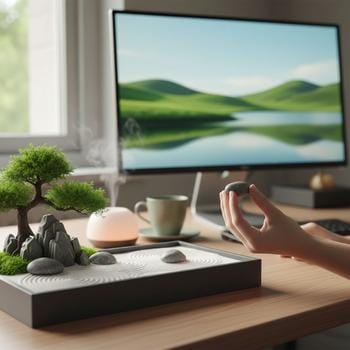
In today’s fast-paced work environments, stress relief is more important than ever. Many professionals seek ways to cultivate calm and clarity during busy workdays without needing to leave their desks or disrupt their workflow. Desk meditation offers a practical and accessible solution to this challenge by integrating mindfulness seamlessly into the workplace.
Desk meditation involves practicing mindfulness and seated meditation techniques right at your workstation. This approach allows you to experience the benefits of deep relaxation, improved focus, and emotional balance without allocating extra time away from work tasks. With just a few intentional moments of breath awareness and posture adjustment, you can significantly reduce stress and tension accumulated throughout the day.
Workplace mindfulness through desk meditation is gaining popularity due to its simplicity and effectiveness. It is especially suited for office workers, remote employees, and anyone who spends long hours seated. By fostering a habit of mindful awareness, desk meditation can enhance productivity, creativity, and overall wellbeing.
“Incorporating short, mindful breaks into your workday can transform your mental state and reduce stress, even in the busiest environments.”
In this guide, we will explore what desk meditation is, why it works, and offer practical tips and exercises to help you integrate this powerful practice into your daily routine. From seated posture tips to breath awareness techniques and mindfulness exercises targeting shoulder tension, you’ll discover how to cultivate calm and resilience without leaving your desk.
What Desk Meditation Is and Why It Works
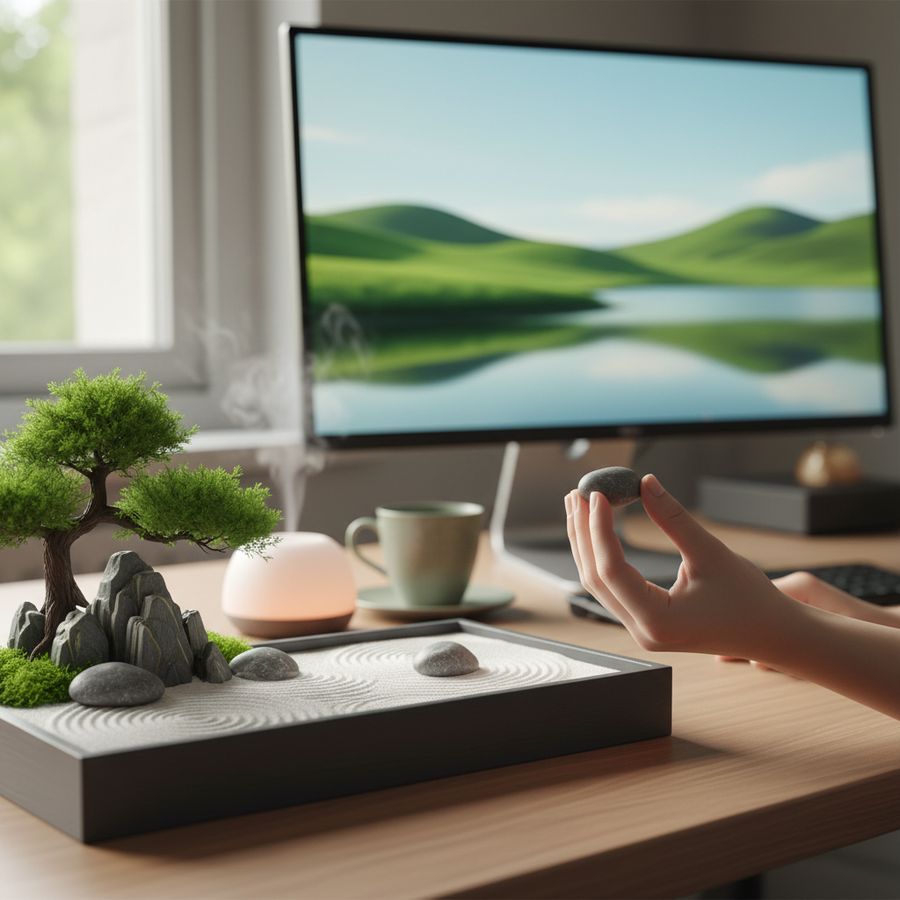
Desk meditation is a form of seated meditation practiced right at your workstation, designed to bring mindfulness and calm into your workday. Unlike traditional meditation that often requires a quiet space and dedicated time, desk meditation is flexible and can be done in brief intervals, making it ideal for busy professionals.
The core principle behind desk meditation is breath awareness — focusing your attention on the natural rhythm of your breathing. This simple act helps anchor your mind, reducing mental chatter and stress. When practiced regularly, it can lower cortisol levels, improve concentration, and promote emotional regulation.
Why does desk meditation work so well in the workplace? It leverages the power of mindful presence to interrupt stress cycles that build up during demanding tasks. Instead of pushing through tension and overwhelm, pausing to center yourself allows your nervous system to reset.
Additionally, seated meditation at your desk encourages better posture and physical relaxation, which can alleviate common issues like neck and shoulder pain. This holistic approach to workplace mindfulness supports both mental and physical health, making it a sustainable stress relief strategy.
“Mindfulness at work is not just a wellness trend — it’s a scientifically supported way to enhance focus, reduce stress, and foster well-being.”
Integrating desk meditation into your routine empowers you to cultivate calm, clarity, and resilience amidst the busyness of your professional life.
Seated Posture Tips for Desk Meditation
Proper posture is fundamental to effective seated meditation, especially when practicing at your desk. Maintaining an aligned and comfortable posture ensures you stay alert yet relaxed, enabling deeper breath awareness and stress relief.
Begin by sitting with your feet flat on the floor, hip-width apart, grounding your body firmly. Your hips should be positioned slightly higher than your knees to promote natural lumbar curve support. Avoid crossing your legs, as this can restrict circulation and cause discomfort.
Keep your spine straight but not rigid. Imagine a string gently pulling the crown of your head toward the ceiling, elongating your neck and aligning your vertebrae. Relax your shoulders away from your ears, allowing them to drop naturally without slumping forward.
Your hands can rest comfortably on your lap or desk, palms facing down or up, whichever feels more natural. If your chair has back support, use it mindfully to maintain posture without becoming dependent on it.
Feet planted firmly: Helps with grounding and stability.
Spine elongated: Supports alertness and breathing.
Relaxed shoulders: Reduces tension in neck and upper back.
Chin slightly tucked: Aligns the neck and opens the throat.
By cultivating awareness of your seated posture during desk meditation, you not only improve physical comfort but also enhance your mental focus. This mindful body alignment becomes a foundational practice that supports your overall workplace mindfulness journey.
Simple Breath Awareness At Your Desk
Breath awareness is the cornerstone of desk meditation and an incredibly effective tool for stress relief at work. Practicing mindful breathing helps center your attention, calm your nervous system, and increase your capacity to handle workplace challenges with ease.
To begin, sit comfortably with your posture aligned as previously described. Close your eyes if you feel comfortable, or soften your gaze toward a neutral spot on your desk. Bring your attention gently to your breath without trying to control it.
Notice the natural rise and fall of your abdomen or chest with each inhale and exhale. Allow your breath to be slow, smooth, and steady. If your mind wanders, gently guide it back to the sensation of breathing.
Try this simple breath awareness exercise:
Inhale deeply through your nose for a count of four.
Pause briefly at the top of the breath for a count of two.
Exhale slowly through your mouth for a count of six.
Repeat this cycle for 3 to 5 minutes, focusing solely on your breath.
As you engage in this practice, you’ll begin to notice a reduction in stress and a clearer, calmer mind. This technique can be done discreetly at your desk anytime you feel overwhelmed or need a quick mental reset.
“Breath is the bridge that connects your body and mind — cultivating breath awareness unlocks profound relaxation even in the busiest settings.”

Mindfulness Exercises for Tension in Shoulders
Shoulder tension is a common physical manifestation of workplace stress. Fortunately, simple mindfulness exercises can provide immediate relief, promoting relaxation and easing discomfort without leaving your desk.
Begin by bringing your attention to your shoulders. Notice any areas of tightness, stiffness, or discomfort without judgment. This non-reactive awareness is key to releasing tension effectively.
Here are some mindfulness exercises tailored to shoulder tension:
Shoulder Rolls: Slowly roll your shoulders forward in a circular motion five times, then reverse the direction. Focus on the sensation of movement and the release of tightness.
Shoulder Shrugs: Inhale deeply while lifting your shoulders toward your ears. Hold briefly, then exhale as you release your shoulders down with intention. Repeat 5 cycles.
Progressive Muscle Relaxation: Tense your shoulder muscles firmly for 5 seconds, then fully relax. Notice the contrast between tension and ease. Repeat 3 times.
Mindful Visualization: Imagine warm, soothing energy flowing into your shoulders, melting away tightness and stress.
Practicing these exercises regularly throughout your workday not only alleviates physical discomfort but also reinforces your commitment to workplace mindfulness. Over time, this mindful attention to your body can prevent chronic pain and improve overall wellbeing.
“Listening to your body’s signals and responding with mindful care is a powerful step toward sustainable stress relief.”
How to Stay Consistent with Workplace Mindfulness
Consistency is essential to fully reap the benefits of desk meditation and workplace mindfulness. Establishing a daily routine helps make mindfulness a natural and sustainable part of your work life.
Here are some practical strategies to maintain consistency:
Set reminders: Use phone alarms or calendar notifications to prompt regular mindful pauses throughout your day.
Create a dedicated space: Arrange your desk to be conducive to meditation, with minimal distractions and comfortable seating.
Start small: Commit to just 2-3 minutes of breath awareness or posture checks initially, gradually increasing as you feel comfortable.
Incorporate rituals: Link your meditation practice with daily activities like starting your computer, taking lunch breaks, or ending meetings.
Practice self-compassion: Be gentle with yourself on days when mindfulness feels challenging, and simply return to the practice without judgment.
By integrating these habits, workplace mindfulness becomes more than a task — it becomes a nourishing part of your professional routine. Over time, this practice will enhance your resilience, focus, and overall wellbeing.
“Mindfulness is a journey, not a destination. Consistency and kindness toward yourself are the keys to lasting transformation.”
Conclusion
Desk meditation offers a practical, accessible path to stress relief and enhanced wellbeing right at your workstation. By incorporating simple seated meditation techniques, breath awareness, and mindful posture, you can transform your workday experience and foster a deeper sense of calm and focus.
As workplace demands increase, fostering mindfulness at your desk is an effective method to safeguard your mental and physical well-being. By focusing on your breath, easing shoulder tension, and taking regular mindfulness breaks, you can build resilience against stress and achieve lasting balance. To learn more about cultivating mindfulness, check out Nature Nurturers.
Remember, this is a natural and holistic approach aligned with the principles of mindful living and self-care. By embracing desk meditation, you invite more peace, clarity, and wellbeing into your professional life — all without stepping away from your workspace.
Begin today with small, intentional moments and watch how this simple practice can nurture your body, mind, and soul amidst the demands of modern work life.
“Let mindfulness at work be your anchor — a natural way to nurture calm, clarity, and vitality throughout your day.”
