


Overview
Vitamin B12 deficiency is more common than many people realize, and it can affect energy, mood, nerve health, and even memory. Because symptoms often develop slowly, people may dismiss them as stress, aging, poor sleep, or a busy lifestyle. Yet low B12 can quietly worsen over time, especially if the root cause is not addressed. For a wellness-focused lifestyle, understanding this nutrient is an important step toward feeling balanced and strong.
Vitamin B12 is a water-soluble vitamin found mainly in animal-based foods, and your body depends on it for several essential functions. Unlike some nutrients, B12 deficiency is not always caused by poor food choices alone. In many cases, the issue involves poor absorption, digestive changes, certain medications, or restrictive eating patterns. That is why someone can eat reasonably well and still develop low levels.
One challenge with B12 deficiency symptoms is that they can overlap with other health concerns. Fatigue, weakness, brain fog, dizziness, pale skin, tingling hands, and mood changes are all possible warning signs. Left untreated, deficiency may lead to more serious nerve-related complications and anemia.
Vitamin B12 deficiency is not just about feeling tired — it can influence how your blood cells, brain, and nerves function every day
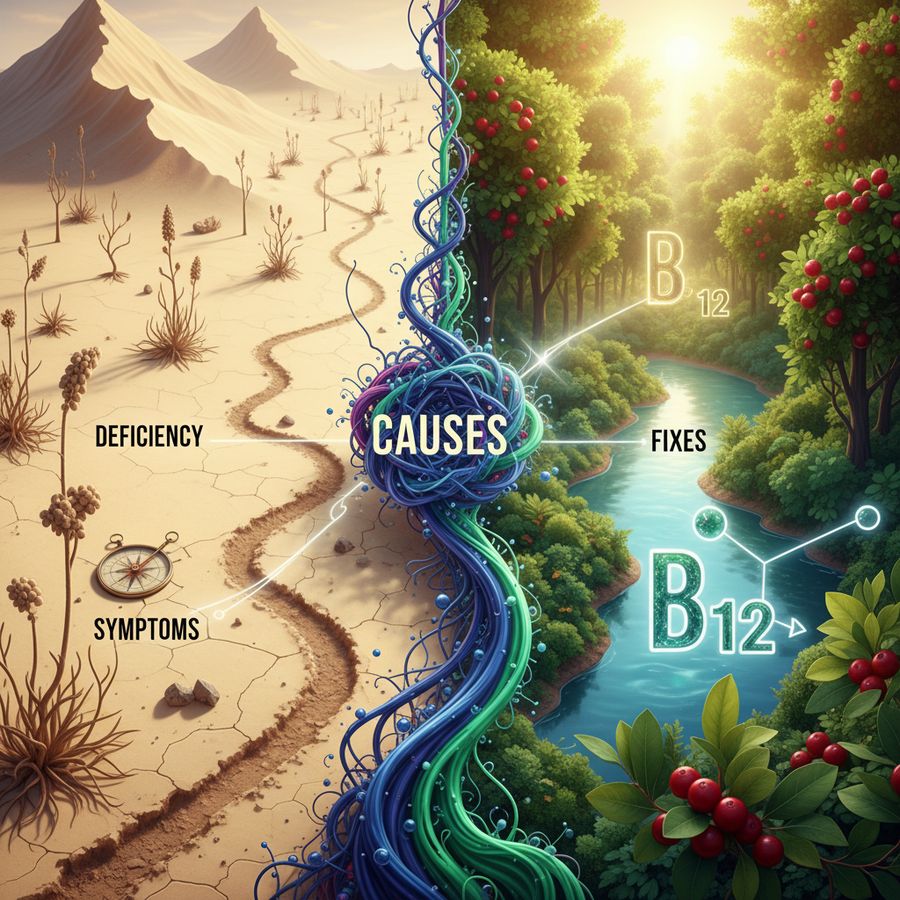
The good news is that in many cases, low B12 can be corrected through a combination of better food choices, targeted absorption strategies, and the right B12 supplement when needed. In this guide, we will explore what vitamin B12 does, the most common symptoms, who is most at risk, and practical ways to restore healthy levels naturally and effectively.
What Vitamin B12 Does for Your Body
Vitamin B12 plays a powerful behind-the-scenes role in keeping the body functioning smoothly. It helps form healthy red blood cells, supports DNA production, and is essential for maintaining the protective covering around nerves. Without enough B12, the body struggles to deliver oxygen efficiently and keep the nervous system working as it should.
One of its best-known jobs is energy support. While B12 does not work like a stimulant, it helps your body convert food into usable energy. When levels are low, people often feel drained, foggy, or physically weak. This is one reason vitamin B12 deficiency is often first noticed through constant fatigue or poor stamina.
B12 is also deeply connected to brain and nervous system health. Healthy levels may support concentration, memory, and mental clarity. When deficiency develops, some people notice tingling in the hands and feet, numbness, poor balance, irritability, or difficulty focusing. These symptoms happen because nerves rely on B12 for normal maintenance and signaling.
- Red blood cell formation to help carry oxygen through the body
- Nervous system support for healthy communication between brain and body
- DNA synthesis which is vital for cell growth and repair
- Energy metabolism to help turn food into fuel
Because B12 affects so many systems at once, even a mild shortage can create widespread symptoms. That is why recognizing its role is so important. When your body has enough vitamin B12, you are better supported in everything from energy and movement to mood and cognitive performance.
Common Vitamin B12 Deficiency Symptoms
The signs of low B12 can be subtle at first, which makes them easy to overlook. Many people live with symptoms for months before realizing they may be linked to vitamin B12 deficiency. Fatigue is one of the most common complaints, but it is far from the only one. When the body cannot make healthy red blood cells efficiently, oxygen delivery may drop, leading to weakness, shortness of breath, and reduced stamina.
Neurological symptoms are another major clue. Because vitamin B12 is essential for nerve health, deficiency can affect sensation and coordination. People may notice tingling in the hands or feet, numbness, muscle weakness, balance problems, or a strange pins-and-needles feeling. In some cases, these symptoms can become more serious if low B12 is left untreated.
Mental and emotional changes can also appear. Brain fog, forgetfulness, low mood, poor concentration, and irritability are all possible B12 deficiency symptoms. Some people also experience pale or slightly yellowish skin, headaches, dizziness, or a sore tongue. Since these issues can overlap with other deficiencies or health conditions, proper testing is important.
If symptoms involve tingling, numbness, confusion, or worsening fatigue, it is wise to seek medical guidance rather than self-diagnosing
- Persistent tiredness or weakness
- Tingling or numbness in hands and feet
- Brain fog or memory trouble
- Dizziness or lightheadedness
- Pale skin or shortness of breath
- Mood changes or irritability
Because low B12 can affect both blood and nerves, symptoms may vary from person to person. Paying attention early can help prevent long-term complications and make recovery much smoother.
Who Is Most At Risk of Low B12
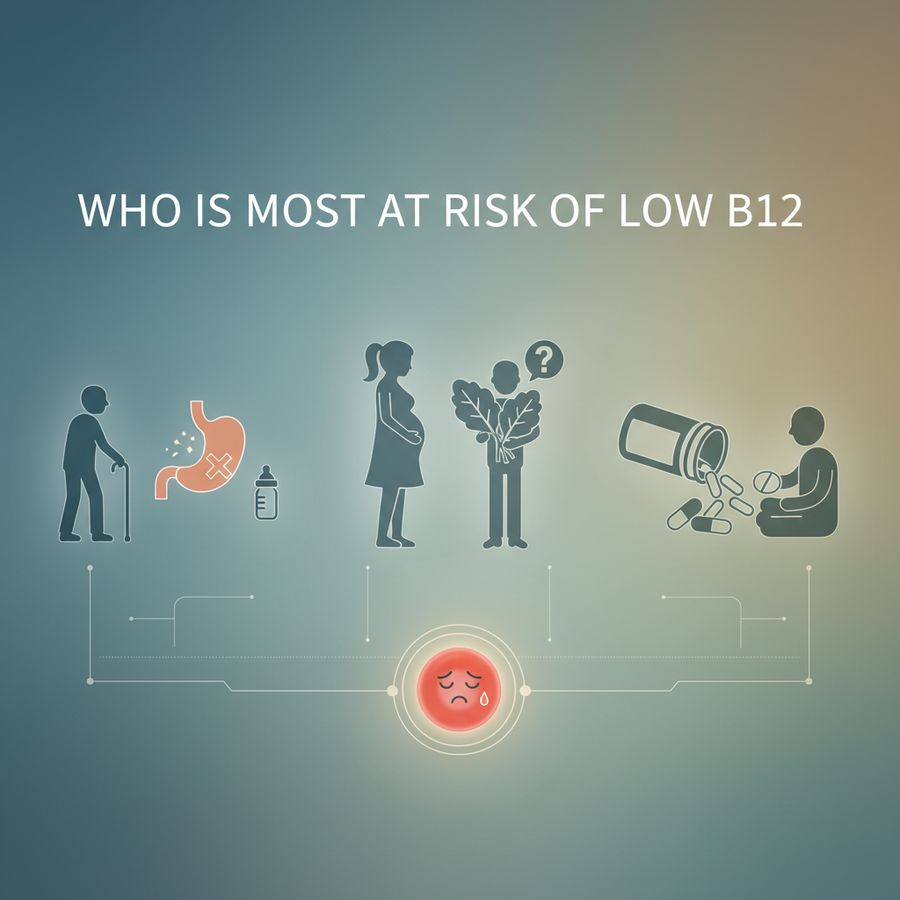
Not everyone has the same risk of developing low B12. Some people are more vulnerable because of their diet, while others struggle with absorption even if they eat enough B12-rich foods. Understanding who is most at risk helps you take earlier action and reduce the chance of long-term deficiency.
Vegans and strict vegetarians are among the most recognized at-risk groups because natural vitamin B12 foods are found mostly in animal products such as meat, fish, eggs, and dairy. Without fortified foods or a reliable B12 supplement, intake may be too low over time. Older adults also face a higher risk because stomach acid tends to decline with age, making B12 harder to absorb from food.
Digestive conditions can also interfere with absorption. People with pernicious anemia, Crohn’s disease, celiac disease, gastritis, or a history of gastrointestinal surgery may have trouble absorbing B12 properly. Certain medications, including long-term use of metformin or acid-reducing drugs, can further lower B12 status.
- Vegans and vegetarians without fortified foods or supplements
- Adults over 50 with lower stomach acid
- People with digestive disorders affecting absorption
- Those using metformin or acid-blocking medications long term
- Individuals with poor appetite or very restrictive diets
Pregnant or breastfeeding women following plant-based diets may also need extra attention, since B12 needs remain important for both mother and baby. If you fall into any of these groups, it may be helpful to monitor symptoms and consider professional testing rather than waiting for signs to become more obvious.
Best B12 Foods and Absorption Tips
One of the most practical ways to support healthy B12 levels is to prioritize the right foods. The best vitamin B12 foods are primarily animal-based, including beef, liver, fish, shellfish, eggs, milk, yogurt, and cheese. For many people, eating these foods regularly can help maintain adequate intake. However, food alone may not solve the problem if absorption is poor.
Fortified foods can be especially helpful for people eating mostly plant-based diets. Some breakfast cereals, plant milks, and nutritional yeast products are fortified with B12, but labels should be checked carefully because amounts vary. Relying on “natural” plant foods alone is not usually enough, since B12 is not consistently available in meaningful amounts in unfortified vegan foods.
Absorption matters just as much as intake. Vitamin B12 from food needs stomach acid and a protein called intrinsic factor for proper absorption. Digestive issues, low stomach acid, and some medications can interfere with this process. In those cases, higher-dose oral supplements or other forms of treatment may be recommended.
- Eat fish, eggs, dairy, or lean meats regularly if included in your diet
- Use fortified plant foods if you avoid animal products
- Review medications that may affect absorption
- Address digestive issues that may reduce nutrient uptake
- Consider testing if symptoms persist despite eating B12-rich foods
For some people, the real issue is not how much B12 they eat — it is how much their body can actually absorb
A smart, balanced approach combines nutrient-dense meals with awareness of your digestion, lifestyle, and personal risk factors.
B12 Supplements: Methylcobalamin Vs Cyanocobalamin
When diet alone is not enough, a B12 supplement can be an effective way to restore healthy levels. Two of the most common forms are methylcobalamin and cyanocobalamin. Both can help correct deficiency, but they differ slightly in structure, stability, and how they are used in the body.
Methylcobalamin is one of the active forms of vitamin B12, which means the body can use it directly in certain processes. It is often marketed as a more natural or bioactive option, especially in wellness circles. Some people prefer it for nerve support, though individual responses can vary. Cyanocobalamin, on the other hand, is a highly stable synthetic form that has been widely used in supplements and research for many years. The body converts it into active forms as needed.
For most people, both forms can be useful, and the best choice often depends on personal preference, cost, tolerance, and guidance from a healthcare professional. What matters most is choosing a dose and format that matches the reason for supplementation. Tablets, sublingual lozenges, sprays, and injections may all have a role depending on severity and absorption status.
- Methylcobalamin: active form, popular for nerve-health support
- Cyanocobalamin: stable, affordable, and commonly used
- Sublingual forms: useful for convenience, though not always superior
- Injections: may be used in severe deficiency or absorption problems
If symptoms are significant or lab results are very low, self-treating may not be enough. A guided plan helps ensure that supplementation is not only effective, but also safe and appropriate for your specific needs.
Conclusion
Vitamin B12 deficiency can quietly affect energy, mood, nerves, and overall vitality, but with awareness and the right steps, it is often very manageable. The key is recognizing that low B12 does not always come from poor eating habits alone. For many people, the deeper issue involves digestion, medication use, age-related changes, or limited absorption.
By learning the most common B12 deficiency symptoms, identifying personal risk factors, and adding more vitamin B12 foods where possible, you can take a proactive approach to better health. For those who need extra support, the right B12 supplement may help restore levels and improve symptoms over time. Whether you choose methylcobalamin or cyanocobalamin, consistency and proper guidance matter more than marketing claims alone.
Nature-centered wellness is often about listening carefully to the body before deeper imbalance develops. Persistent fatigue, tingling, weakness, or brain fog should not be ignored, especially if they continue despite rest and healthy habits. A simple test and a thoughtful plan can make a meaningful difference.
Small nutrient deficiencies can create big daily struggles, but informed action can help the body recover and thrive
If you suspect low B12, it’s a good idea to consult a qualified healthcare professional for testing and personalized advice. With the right balance of nourishment, support, and follow-through, you can protect your energy, support your nervous system, and work towards more vibrant long-term wellness. For more resources, consider visiting Nature Nurturers.
