

Shilajit Benefits:
8 Reasons
This Himalayan Resin Is Everywhere in 2026
Search interest in shilajit has exploded over the past year. Here's what the clinical research actually shows — and how to use it safely.

What You'll Learn in This Guide
- What shilajit actually is and where it comes from
- The 8 most studied benefits and what the research shows
- Why purity and sourcing matter so much
- How much to take and the best way to use it
- Who should avoid it
- How it compares to other adaptogens
If your feed has been full of dark, tar-like resin dissolving into warm water lately, you've already met shilajit. It's one of the fastest-rising natural health topics of 2026, and unlike a lot of viral wellness trends, it actually has a real body of clinical research behind it — not just centuries of Ayurvedic tradition. If you've followed our coverage of adaptogenic herbs, shilajit fits naturally into that same category of substances that help the body adapt to stress and restore energy.
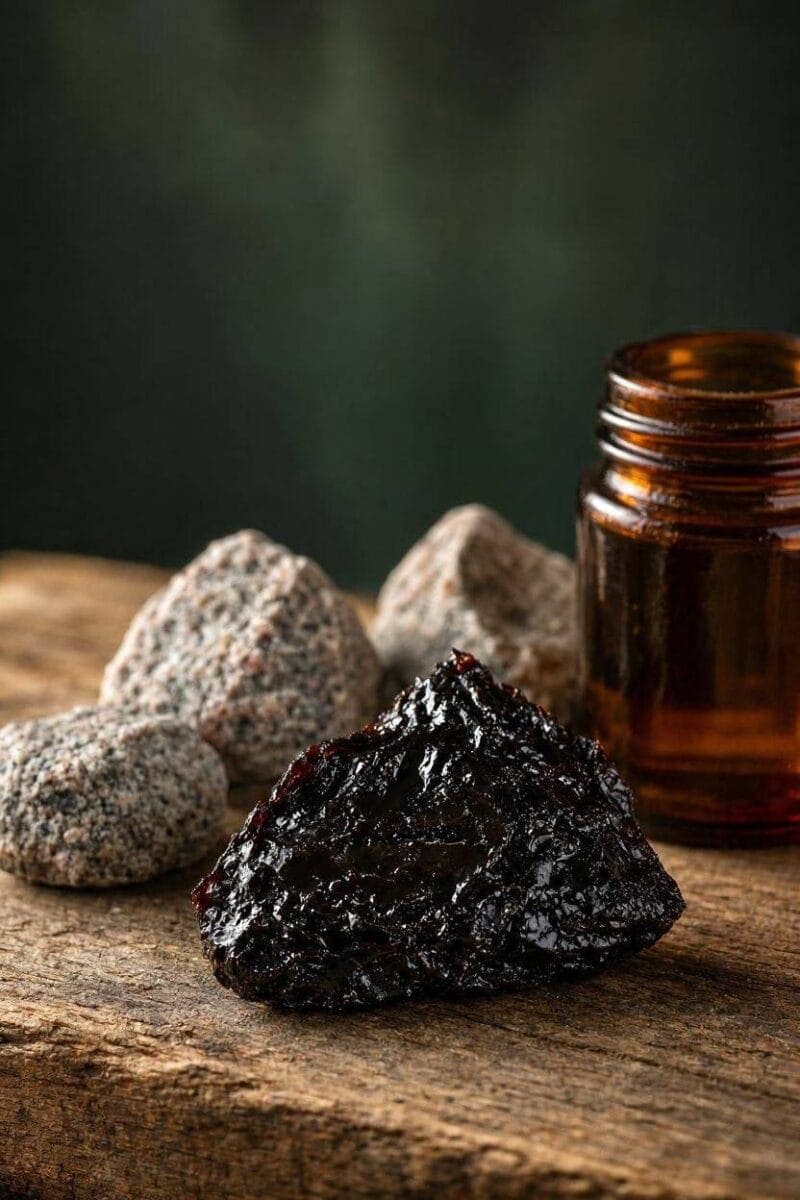
Shilajit is a sticky, mineral-dense resin that forms over centuries as plant matter slowly decomposes within rock crevices in high-altitude mountain ranges, primarily the Himalayas, Altai, and Caucasus mountains. It contains more than 84 trace minerals along with fulvic acid and humic acid — compounds that researchers believe are responsible for most of its biological effects. It is not a plant and not a true mineral; it sits in a category of its own.
What's pushed shilajit from niche Ayurvedic remedy to mainstream supplement shelf is a small but growing set of randomized, placebo-controlled human trials — something most viral supplements never have. This guide walks through exactly what those studies found, alongside how shilajit connects to topics we've covered before like cortisol regulation and mitochondrial and gut health.
Where Shilajit Comes From — and Why Purity Is Everything
Understanding how shilajit forms explains both its appeal and its biggest risk. It is not manufactured — it's harvested directly from mountain rock, which means raw, unprocessed shilajit can also contain heavy metals like lead, mercury, and arsenic absorbed from the surrounding minerals.

A pea-sized amount of resin, dissolved in warm water, is the traditional way shilajit has been taken for centuries.
8 Science-Backed Benefits of Shilajit
Shilajit research is still young compared to better-studied compounds, and several trials have been funded by supplement manufacturers, which means the findings deserve healthy skepticism alongside genuine interest. Here's what the current evidence actually shows.
Testosterone & Hormone Support
A 2016 randomized, double-blind trial in Andrologia found that 250mg of purified shilajit taken twice daily for 90 days raised total testosterone by roughly 20% and free testosterone by about 19% in healthy men aged 45–55, compared to placebo. It's the most cited shilajit study to date, though it was funded by a supplement manufacturer. For the best results, it's wise to look into high-purity resin options that are third-party tested for potency.
Cellular Energy & Mitochondrial Function
Fulvic acid and compounds called dibenzo-alpha-pyrones appear to act as electron carriers that support mitochondrial energy production at the cellular level — the same energy pathway that magnesium is also essential for.
Reduced Exercise Fatigue
A controlled study found that shilajit supplementation reduced fatigue-induced declines in muscular strength and lowered serum hydroxyproline, a marker of connective tissue breakdown, after repeated muscle exertion in active men. Active individuals often combine this with a high-potency lab-tested extract to support physical performance.
Antioxidant & Anti-Inflammatory Activity
In patients with type 2 diabetes, 12 weeks of shilajit supplementation improved endothelial function and reduced inflammatory and oxidative stress markers while increasing nitric oxide and glutathione — the body's master antioxidant.
Healthy Aging & Oxidative Stress
A separate trial in elderly hypertensive patients found that shilajit decreased oxidized LDL and malondialdehyde while boosting the body's total antioxidant capacity — markers closely tied to cellular aging. Many looking for long-term wellness benefits turn to fulvic-acid rich formulations that support this process.
Male Fertility Support
Traditional Ayurvedic use classifies shilajit as a fertility aid, and small preliminary studies have shown increases in sperm count and motility. However, these trials are older and used very small sample sizes, so this benefit remains the least certain of the group.
Nutrient & Mineral Absorption
Fulvic acid is believed to act as a natural carrier molecule, helping transport minerals across cell membranes more efficiently. This is one reason shilajit is often paired with other nature's nutrition mineral-rich foods rather than taken in isolation.
Bone & Tissue Support
Early experimental research suggests shilajit may support bone regeneration and connective tissue repair, likely linked to its mineral density and antioxidant effects, though most of this evidence currently comes from animal studies. For maximum bioavailability, many opt for convenient capsule forms for daily, consistent use.
Several of the most-cited shilajit studies were funded by the companies selling the tested product, which raises a real risk of bias. The findings are promising but not definitive. Treat strong marketing claims with caution, and look for brands that publish independent, third-party lab testing for purity rather than only citing testosterone statistics.
Forms of Shilajit and How to Use Them
Shilajit is sold in a few different forms, each with tradeoffs worth knowing before you buy.

Resin, capsules, and powder are the three most common forms shilajit is sold in.
⛰️ Recommended Purified Shilajit
Third-party lab tested for heavy metals, with transparent sourcing — our top pick for daily use.
🛒 Check Price on Amazon⚠️ Affiliate link — I earn a small commission at no extra cost to you.
How Much Shilajit Should You Take?
Begin with 250mg of purified extract once daily, or a piece of resin roughly the size of a grain of rice, for the first week to assess tolerance.
Most clinical trials used 250mg twice daily or 500mg once daily of purified extract, taken with food to reduce the chance of mild digestive upset.
Benefits in the research took 8 to 12 weeks of consistent daily use to become measurable. Shilajit is not a same-day energy fix — it works gradually, similar to adaptogenic herbs.
Shilajit works best as one part of a broader routine — alongside adequate magnesium intake, stress management, and good sleep — rather than as a standalone fix.
Some practitioners recommend cycling shilajit — for example, 8 to 12 weeks on, followed by a short break — though there's limited research on long-term continuous use, so this is a precaution rather than a proven requirement.
Shilajit is not recommended for pregnant or breastfeeding women, people with hemochromatosis or other iron overload conditions, or those with sickle cell disease, due to its mineral content. People on blood pressure or hormone medications should speak with a doctor first, since shilajit may interact with these. Always choose a purified, third-party tested product to avoid heavy metal exposure.
How Shilajit Connects to the Rest of Your Health
Shilajit and cortisol: By supporting mitochondrial energy production and reducing oxidative stress, shilajit may help the body handle the energy demands of chronic stress more efficiently, complementing strategies in our guide to lowering cortisol naturally.
Shilajit and magnesium: Both compounds converge on the same cellular energy pathway — ATP production in the mitochondria. A magnesium deficiency can blunt the energy benefits people expect from shilajit, so addressing both together tends to produce better results than either alone.
Shilajit and gut health: Fulvic acid's role in mineral absorption depends heavily on gut integrity. A compromised gut lining, the focus of our microbiome reset guide, may limit how much benefit you actually get from shilajit's mineral content.
Shilajit and adaptogens: While not technically an adaptogen, shilajit is often used alongside ashwagandha and rhodiola in stacks aimed at energy and stress resilience, since the mechanisms are complementary rather than redundant.
Frequently Asked Questions
Is shilajit safe to take every day?
For most healthy adults, a purified, third-party tested shilajit product taken at studied doses (250–500mg daily) appears safe for daily use over periods of up to several months based on current trial data. Long-term safety beyond a year has not been well studied, so periodic breaks are a reasonable precaution.
How is shilajit different from other adaptogens like ashwagandha?
Ashwagandha primarily works on the stress-hormone axis and nervous system, while shilajit's main studied effects center on mineral content, mitochondrial energy, and testosterone support. Many people use them together rather than as substitutes — see our guide to adaptogenic herbs for the full comparison.
What should I look for when buying shilajit?
Look for three things: a certificate of analysis confirming heavy metal testing, a clearly stated fulvic acid percentage (typically 50%+ for resin), and sourcing transparency about which mountain range it was harvested from. Avoid unverified raw resin sold without any lab documentation.
⭐ Third-party tested · Transparent sourcing
🛒 View Lab-Tested Shilajit on Amazon⚠️ Affiliate link — I earn a small commission at no extra cost to you.
Does shilajit actually work, or is it just hype?
It sits in a middle ground: unlike most viral supplements, shilajit has several small, randomized, placebo-controlled human trials behind it — which is genuinely rare. But many of those trials are manufacturer-funded and use small sample sizes, so the honest answer is "promising but not conclusive." It deserves more credit than a typical TikTok trend, and less certainty than the marketing suggests.
Stop use and consult a healthcare provider if you experience unusual heart palpitations, rash, digestive distress that doesn't resolve, or signs of hormone-related side effects. This article is for educational purposes only. Visit our disclaimer page for full details on how to use our content responsibly.
The Bottom Line
Shilajit's rise in 2026 isn't pure hype — it's one of the few viral supplements backed by actual randomized human trials, even if those trials are still small and need independent replication. The most consistent, best-supported benefits are around cellular energy, antioxidant activity, and testosterone support in middle-aged men, while claims around fertility and longevity remain promising but underproven.
If you decide to try it, purity is the deciding factor — not the brand with the loudest marketing. A purified, lab-tested resin or extract, taken consistently for at least 8–12 weeks alongside the basics like adequate magnesium and stress management, is the most evidence-aligned way to use it.
⛰️ Ready to Try Purified Shilajit?
Our top pick is third-party lab tested for heavy metals, with transparent mountain sourcing.
🛒 Buy on AmazonAffiliate link — small commission at no extra cost to you
Start with the basics — a properly tested product, a low starting dose, and patience for the 8–12 week window the research points to. From there, explore the rest of our natural remedies library for the next step on your wellness journey, or contact us with any questions — we reply to every message personally.
Want More Free Natural Health Guides?
Join thousands of readers getting science-backed wellness tips every week — always free, never spam.
Browse All Articles →